五十嵐威暢は、日本の戦後デザイン史において重要な位置を占める造形家であり、グラフィックデザイン、プロダクトデザイン、彫刻、教育といった複数の領域を横断しながら、デザインと生活の関係性を問い続けてきた。
1944年、北海道滝川市に生まれた五十嵐は、多摩美術大学でデザインを学んだ後、アメリカ・UCLA大学院に進学する。ここで彼は、当時の西海岸における先鋭的なグラフィックデザインや環境造形、合理主義的な造形思考に触れ、造形を平面表現としてではなく、空間や構造として捉える視点を獲得した。1970年代から80年代にかけては、アクソノメトリック(等角投影)による立体的な文字表現によって国際的評価を確立し、AGI(国際グラフィック連盟)のメンバーにも選出されている。
この時期の作品において、文字は情報伝達のための記号であると同時に、空間を占有する造形的存在として扱われている。論理的構造と視覚的造形が不可分のものとして提示されている点に、後年の彫刻作品へと連なる五十嵐の思考の基盤を見ることができる。
1980年代後半から90年代初頭にかけて展開されたY.M.Dプロジェクト(Y・M・D)は、五十嵐の造形思想を社会的実践へと展開した代表的な試みである。本プロジェクトは、地方に受け継がれてきた地場産業や伝統工芸の高度な技術と、現代デザインの視点を結びつけ、企画から生産、流通に至るまでを視野に入れた総合的なデザイン活動として行われた。
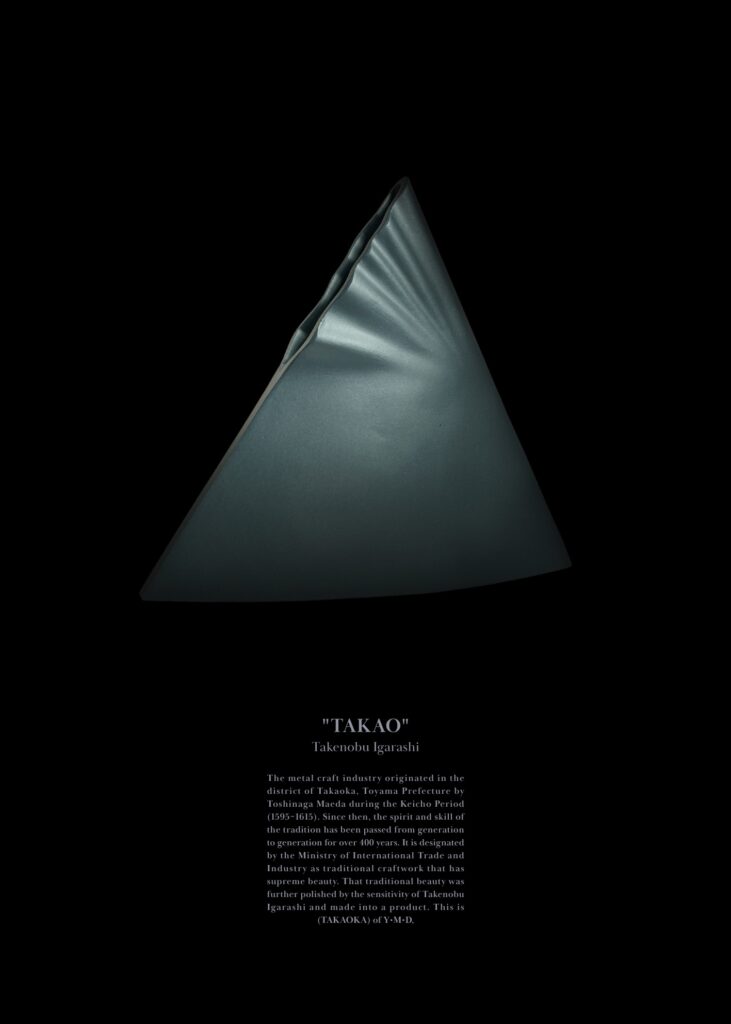
なかでも〈TAKAOKA〉は、慶長年間(1595〜1615)に前田利長によって始められた富山県高岡の金工技術を基盤としている。400年以上にわたり継承されてきたこの金属工芸は、通商産業省(現・経済産業省)により伝統的工芸品に指定されるなど、極めて高い完成度を有する。その伝統的な美と技術は、五十嵐の感性によって再解釈され、素材の特性や重量感を内包した現代のプロダクトとして結実した。
Y.M.Dプロジェクトの意義は、地域の技術を現代の生活環境へと接続した点にとどまらない。デザインが産業構造や文化継承に関与し得ることを具体的に示した点において、日本におけるデザインと地域産業の関係性を再定義する試みとして位置づけられる。
1990年代半ば以降、五十嵐は彫刻制作へと活動の比重を移し、石、木、金属、土などの素材を用いた立体作品やパブリックアートを多数制作した。そこには、初期から一貫する構造的思考と素材への深い理解が認められ、作品は周囲の空間や風景と関係を結びながら静かに存在している。
五十嵐威暢の仕事は、明快な知性に支えられた造形と、生活へのまなざしのあいだに成立している。Y.M.D〈TAKAOKA〉を含むその実践は、デザインを装飾的な表現にとどめることなく、社会と文化の基盤として提示してきた歩みとして評価される。
Takenobu Igarashi is a formative figure in the history of postwar Japanese design. Working across graphic design, product design, sculpture, and education, he consistently explored the relationship between design and everyday life.
Born in 1944 in Takikawa, Hokkaido, Igarashi studied design at Tama Art University before pursuing graduate studies at UCLA in the United States. There, he encountered the experimental graphic design, environmental art, and rationalist approaches that characterized the American West Coast at the time. This experience led him to perceive form not as a two-dimensional expression, but as something spatial and structural. From the 1970s through the 1980s, he gained international recognition for his axonometric three-dimensional typographic works and was elected a member of the Alliance Graphique Internationale (AGI).
In works from this period, letters function not only as symbols for communication but also as sculptural forms that occupy space. The inseparable relationship between logical structure and visual form evident in these works reveals the conceptual foundation that would later extend into his sculptural practice.
The Y.M.D Project (Y・M・D), developed from the late 1980s to the early 1990s, represents a major effort to translate Igarashi’s design philosophy into a form of social practice. The project sought to connect advanced regional industries and traditional crafts with contemporary design, encompassing planning, production, and distribution as an integrated design activity.
Among these initiatives, TAKAOKA is grounded in the metalworking traditions of Takaoka, Toyama Prefecture, which were initiated by Toshinaga Maeda during the Keichō period (1595–1615). This metal craft tradition, refined and transmitted over more than 400 years, has achieved an exceptional level of craftsmanship and has been designated as traditional craftwork by the Ministry of International Trade and Industry (now the Ministry of Economy, Trade and Industry). Through Igarashi’s sensibility, this inherited beauty and technical expertise were reinterpreted and realized as contemporary products that embody the material’s inherent properties and sense of weight.
The significance of the Y.M.D Project lies not only in introducing regional techniques into modern living environments. It also demonstrated how design can engage with industrial structures and cultural continuity, positioning the project as a pioneering attempt to redefine the relationship between design and regional industry in Japan.
From the mid-1990s onward, Igarashi shifted his focus increasingly toward sculpture, producing numerous three-dimensional works and public artworks using materials such as stone, wood, metal, and clay. These works reflect a consistent structural approach and deep material understanding developed throughout his career, existing in quiet dialogue with their surrounding spaces and landscapes.
Takenobu Igarashi’s practice stands at the intersection of intellectual clarity and an attentive engagement with everyday life. Including the Y.M.D TAKAOKA series, his body of work has presented design not as decorative expression, but as a foundational cultural practice that supports and shapes society.